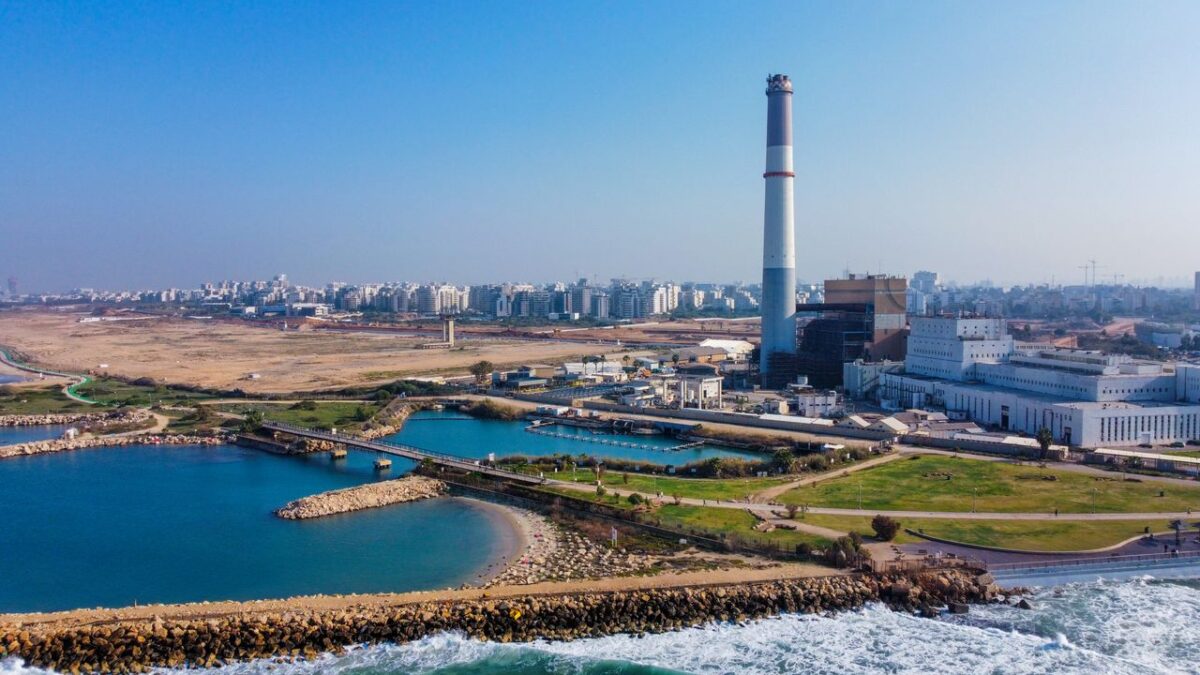
The largest RO plant in the world, by the description on its operator’s page, supplies 909,000 cubic metres of water per day. The same page also carries the figure 2,019,000 cubic metres per day — and that second number belongs to the complex of three plants around it, not to the record holder.
This text is an explainer on the scope of two figures published side by side. It is not an assessment of project attractiveness, not a comparison of equipment suppliers and not a tariff forecast: what is set out is which number belongs to what.
How the two figures appear
The Al Taweelah page opens with a description of the reverse-osmosis unit and closes with a block of three summary figures for the site: three existing plants, 2,019,000 cubic metres of water per day and 3.6 GW of power generation, as retrieved on 23 August 2026.
Between the two sits the record claim itself: the plant is 44 per cent bigger than the world’s current largest RO plant in terms of capacity, supplying 909,000 cubic metres per day. Nothing on the page marks which of the two water figures the record refers to, and the layout puts the larger one last.
What the largest RO plant figure covers
The 909,000 figure is the unit, as published on the complex page on 23 August 2026. Against the complex total of 2,019,000 cubic metres per day it is 45.02%, so the record holder supplies fewer than half the cubic metres the site produces. The remaining 1,110,000 cubic metres per day come from the other two plants on the same site, which the page does not break out.
The claim of being 44 per cent bigger also carries an implied number. If 909,000 is 44 per cent above the previous world record, the previous record was 631,250 cubic metres per day. That figure is not printed anywhere on the page; it follows from the claim, and the page does not name the plant it refers to.
One number needs care. Read as a site total, 909,000 understates Al Taweelah by 1,110,000 cubic metres per day. Read as a plant total, 2,019,000 overstates the record holder by the same amount. The page carries no cut-off date for either value, and the phrase “current largest” is therefore undated as well.
What the same operator publishes elsewhere
Three other complexes on the existing list publish a water figure of their own, and the comparison sharpens the distinction between a unit and a site. The table below sets the record holder beside the complex that contains it and beside the three other sites, with the scope each page states for its own number, as at 23 August 2026.
| Site | Water published | What the figure covers |
|---|---|---|
| Al Taweelah | 2,019,000 m³/day | complex of three plants |
| Taweelah RO unit | 909,000 m³/day | one plant, the record holder |
| Shuweihat | 910,000 m³/day | combined between S1 and S2 |
| Umm Al Nar | 429,000 m³/day | not specified on the page |
| Mirfa 1 | 239,000 m³/day | one plant of five elements |
The Shuweihat page gives 910,000 cubic metres per day and states plainly that the figure is combined between S1 and S2. That combined figure is 1,000 cubic metres per day larger than the world’s largest single RO plant — which is exactly the point: two plants added together beat one plant, and neither number is wrong.
The right figure for the right question
For a question about the record, 909,000 cubic metres per day is the figure and it belongs to one reverse-osmosis unit at Al Taweelah, held 60 per cent by a TAQA and Mubadala partnership with 40 per cent by ACWA Power. For a question about the site, the figure is 2,019,000 cubic metres per day across three plants, alongside 3.6 GW of power.
For a question about the emirate, neither figure answers it. Adding the four sites that publish a water number — Al Taweelah, Shuweihat, Umm Al Nar and Mirfa 1 — gives 3,597,000 cubic metres per day, in which Al Taweelah is 56.13%, Umm Al Nar 11.93% and Mirfa 1 6.64%. Two further entries on the existing list, both at Fujairah, are not included in that sum.
Key takeaways
- The record figure of 909,000 m³/day belongs to one reverse-osmosis unit, not to the Al Taweelah complex.
- Inside that complex the unit is 45.02% of 2,019,000 m³/day; the other two plants supply 1,110,000 m³/day between them.
- The claim of being 44 per cent bigger implies a previous record of 631,250 m³/day, a figure the page does not print.
- Shuweihat publishes 910,000 m³/day combined between S1 and S2, which is 1,000 m³/day more than the largest single plant.
- Four sites with a published water figure add to 3,597,000 m³/day as at 23 August 2026; two further existing entries at Fujairah are outside that sum.
Conclusions
Before either figure travels into a comparison, four checks settle which one belongs there. First, whether the question is about a plant or about a site: 909,000 m³/day answers the first and 2,019,000 m³/day the second, and the page carries both without marking the difference.
Second, whether the comparison figure on the other side is itself a single plant. The clearest counter-example sits on the operator’s own list: 910,000 m³/day at Shuweihat is combined between two plants, one thousand cubic metres a day above the world record for a single one. Third, whether a date is attached — neither page carries a cut-off date, so “current largest” is undated.
Fourth, whether the list being summed is complete. Four sites publish a water figure and add to 3,597,000 m³/day, while two further entries at Fujairah on the existing plants list publish none that was read here, so that sum is a floor rather than an emirate total.
Analysis, not personalised advice. For transactional decisions, confirm the tariff value or rule directly with the utility or the regulator.