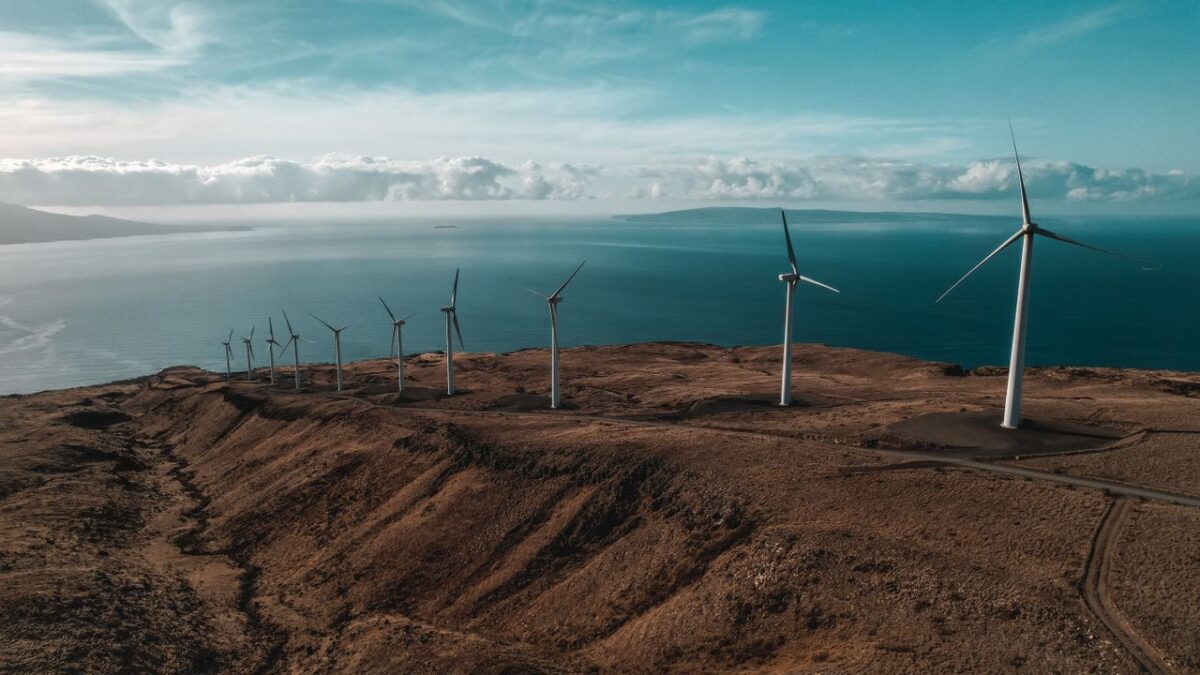
Clean Energy Certificates are the instrument through which a consumer in Abu Dhabi traces electricity back to a clean generation site. The questions below are answered from the scheme page of the offtaker that runs the auctions, as it stood on 23 August 2026.
What is a Clean Energy Certificate?
It is a tradeable digital certificate that verifies the source a specific standard size of energy was generated from. The scheme page states the size of that standard unit as 1 MW/h each, and describes the certificates as currently the only mechanism in Abu Dhabi to guarantee that consumed electricity was produced from clean generation sources. The wording is a claim about the emirate, not about the country.
Who issues them and who runs the auctions?
The two roles are held by two different bodies. The Abu Dhabi Department of Energy is the Accredited Issuer, and the offtaker is the Registrant and auction operator. The scheme page describes the arrangement as support for the Department of Energy Regulatory Policy for Clean Energy Certificates, a strategic initiative to decarbonise the emirate’s electricity value chain, and states that the end-to-end process was designed with minimum barriers to entry.
What generation types are covered?
Three separate certificate types are made available during the auctions: nuclear, solar and wind. That is the product design as published. The same page also carries a sentence stating that the offtaker owns and sells all Clean Energy Certificates for solar and nuclear generated electricity in Abu Dhabi — two of the three types, not three.
Where does the wind volume come from?
One number needs care. The emirate’s wind capacity sits in a single programme whose page gives two different figures as at 23 August 2026: the text says the programme generates over 100 megawatts of renewable energy, while the summary block gives 99 MW (AC) labelled as wind power generation capacity. The difference is that the wind farms also include 14 MW of solar photovoltaic power.
Adding the two gives 113 MW, of which the wind part is 87.61% and the solar part 12.39%. A certificate labelled wind therefore draws on a programme whose own headline figure is not purely wind, and whose three farms sit at Sila, Sir Bani Yas Island and Delma Island, with turbines 95 metres high and a 155-metre wingspan.
How are the certificates sold?
Quarterly auctions take place, managed by the offtaker. During each auction a pay-as-bid mechanism is used for price discovery, meaning the highest bids are served, and a reserve price is applied to provide price support while the market develops and liquidity improves. After the auction, certificate owners may either consume the certificates or sell them on to other participants.
What can a buyer claim with one?
The scheme page frames the claim in the buyer’s own words, as printed on 23 August 2026: it gives the example of an end user stating that their business runs on 100% clean energy. The mechanism behind that claim is traceability of attributes from the location of generation to the place of consumption, which lets a consumer verify progress towards environmental goals rather than change what is physically delivered to the meter.
What standard do the certificates follow?
They conform to International REC Standard measures. That standard is built on a list of rules, regulations and best practices set by the International REC Standard Foundation, which together form its published code. The scheme page names the standard and links to it but does not reproduce any of its provisions, so anything about eligibility periods or redemption rules has to be read at the standard itself, as at 23 August 2026.
The unit notation is worth checking against it. The scheme page writes the certificate size as 1 MW/h, which reads as megawatts per hour rather than megawatt-hours; a megawatt-hour is the energy unit such a certificate normally carries, and the two are not the same quantity, one being a rate divided by time and the other energy. Anyone reconciling certificates held against consumption metered should confirm the intended unit with the registrant before assuming a one-to-one match with megawatt-hours.
Which plants can a certificate point back to?
The generation side is visible on the existing plants list of the same operator, which holds solar plants, the Barakah nuclear plant and the wind programme — one asset class for each of the three certificate types. The scheme page does not map certificates to individual plants, so a certificate names a technology rather than a site or a specific unit within it.
The programme also carries two secondary figures that a wind certificate sits behind: 22,000 households powered across the UAE and 115,000 metric tonnes of carbon emissions avoided per year. Neither is attributed to a single farm, and neither is dated on the page.
What does the page not settle?
Three things. It publishes no auction dates, no reserve price and no issued volumes by type, so neither the size nor the price of the market can be read from it. It does not state who owns the wind certificates, having named the offtaker as owner for solar and nuclear only. And it carries no cut-off date of its own, which is why every figure above is quoted as at 23 August 2026.
Analysis, not personalised advice. For transactional decisions, confirm the tariff value or rule directly with the utility or the regulator.